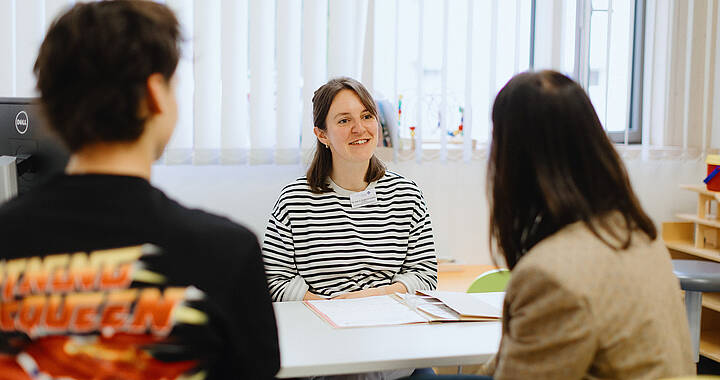
Neurofibromatosis consultation
We are here for you!
During our consultation hours, we would like to learn more about neurofibromatosis – a genetic disorder that affects the nervous system. We will answer your questions and provide you with information about diagnosis, treatment options and how to manage the condition.
Our goal: individual, long-term support – with a view to providing the best possible care for our young patients.
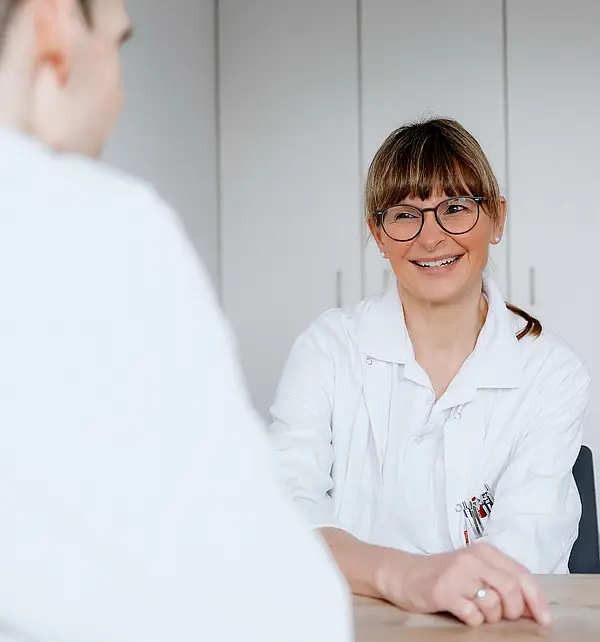
What to expect during the consultation:
Our interdisciplinary team supports children and adolescents with (suspected) neurofibromatosis. We confirm the diagnosis genetically if necessary and then offer comprehensive care with a focus on neuropaediatrics and paediatric oncology. If necessary, we work together with other specialist departments such as paediatric surgery, (neuro)radiology, ophthalmology and paediatric audiology, and arrange for neuropsychological diagnostics. Social counselling and psychological support complement our services in close cooperation with the Bunte Kreis charity.
What are neurofibromatosis?
Neurofibromatosis is a rare, genetically determined disorder that manifests itself in a wide range of clinical symptoms and affects multiple organ systems, including the skin and nervous system. It is a group of disorders that lead to different symptoms but have the development of tumours in common and are therefore considered tumour predisposition syndromes.
These include:
Neurofibromatosis type 1
Neurofibromatosis type 1 (NF1) is the most common disorder in this group and can run in families or occur spontaneously. Café-au-lait spots are a typical first symptom in the first few months. Other characteristics include freckles in the armpits/groin, benign nerve tumours
on the skin or along large nerves, tumours on the optic nerves, iris nodules, bone malformations and neurocognitive impairments.
Neurofibromatosis type 2
Neurofibromatosis type 2 (NF2) is less common than NF1 and is usually diagnosed late, as skin symptoms are generally absent. Typical tumours develop on the auditory and vestibular nerves, as well as on the meninges and spinal cord – small peripheral nerves may also be affected. Many sufferers also develop cataracts.
Schwannomatosis
Schwannomatosis has many clinical similarities with NF2, which is why it often goes undiagnosed and is diagnosed as atypical NF2. A typical symptom of schwannomatosis is the development of multiple nerve tumours in the peripheral nervous system (schwannomas), which usually become noticeable in late adolescence and adulthood in the form of vague pain.
Make an appointment
Your contact:
Dr. Daniela Angelova-Toshkin
Specialist in paediatrics and adolescent medicine, Augsburg University Hospital
Tel.: 0821 400-9300
Fax: 0821 400-179300
Email: ki.onkoamb@uk-augsburg.de
Appointments by telephone:
Monday to Friday, 8:00 a.m. to 3:30 p.m.
Close cooperation with experts:
Prof. Dr. Dr. Michael Christoph Frühwald
Director of the Clinic for Paediatrics and Adolescent Medicine
Prof. Dr. Dr. Michaela Kuhlen
Senior Physician, Clinic for Paediatrics and Adolescent Medicine
Further information can be found on these networks:
Contact and directions:
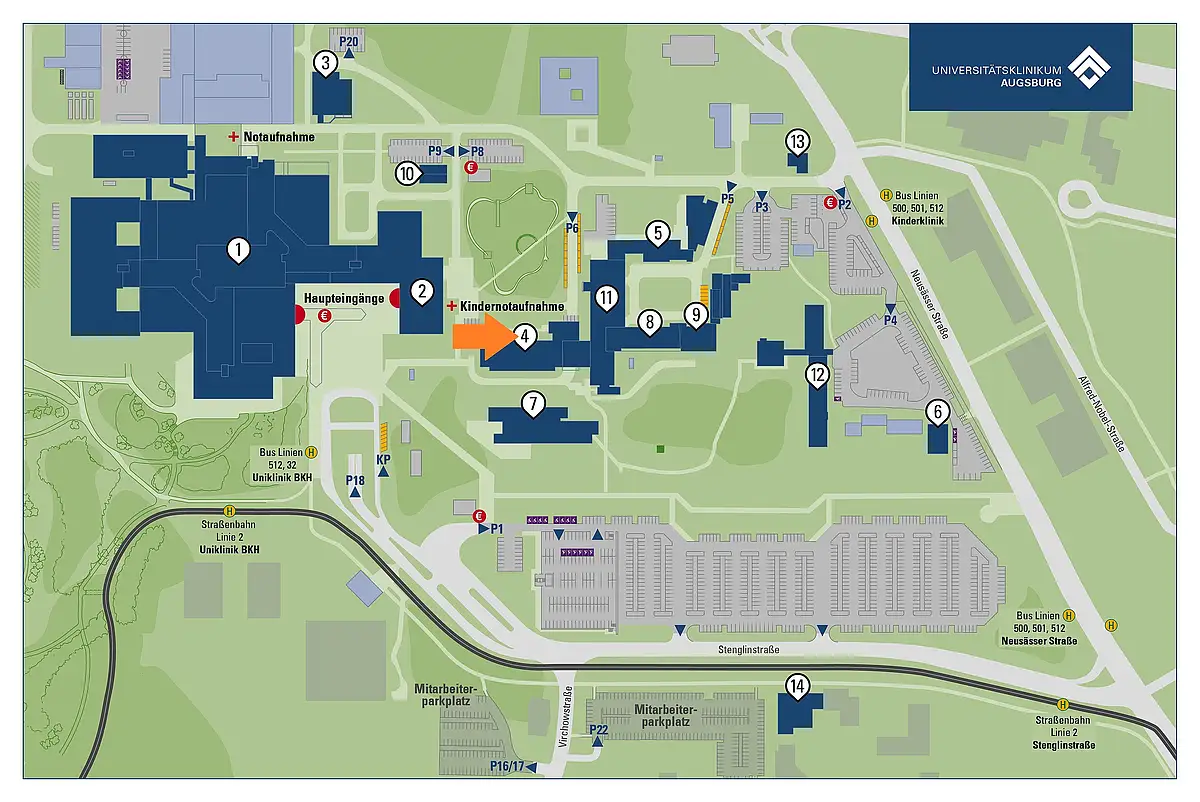
Clinic for Paediatrics and Adolescent Medicine
Neurofibromatosis Consultation
Augsburg University Hospital
Stenglinstr. 2, 86156 Augsburg