Teenagers and Young Adults
Our Swabian Children's Cancer Centre treats not only children from newborn age onwards, but also adolescents and young adults. We work closely with the Comprehensive Cancer Centre Augsburg (CCCA), which has been recognised as a leading oncology centre by German Cancer Aid in association with partners from Würzburg, Erlangen and Regensburg (CCC-WERA).
Beads of courage
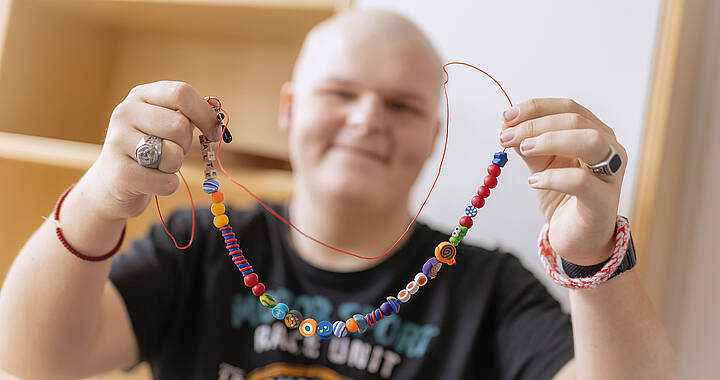
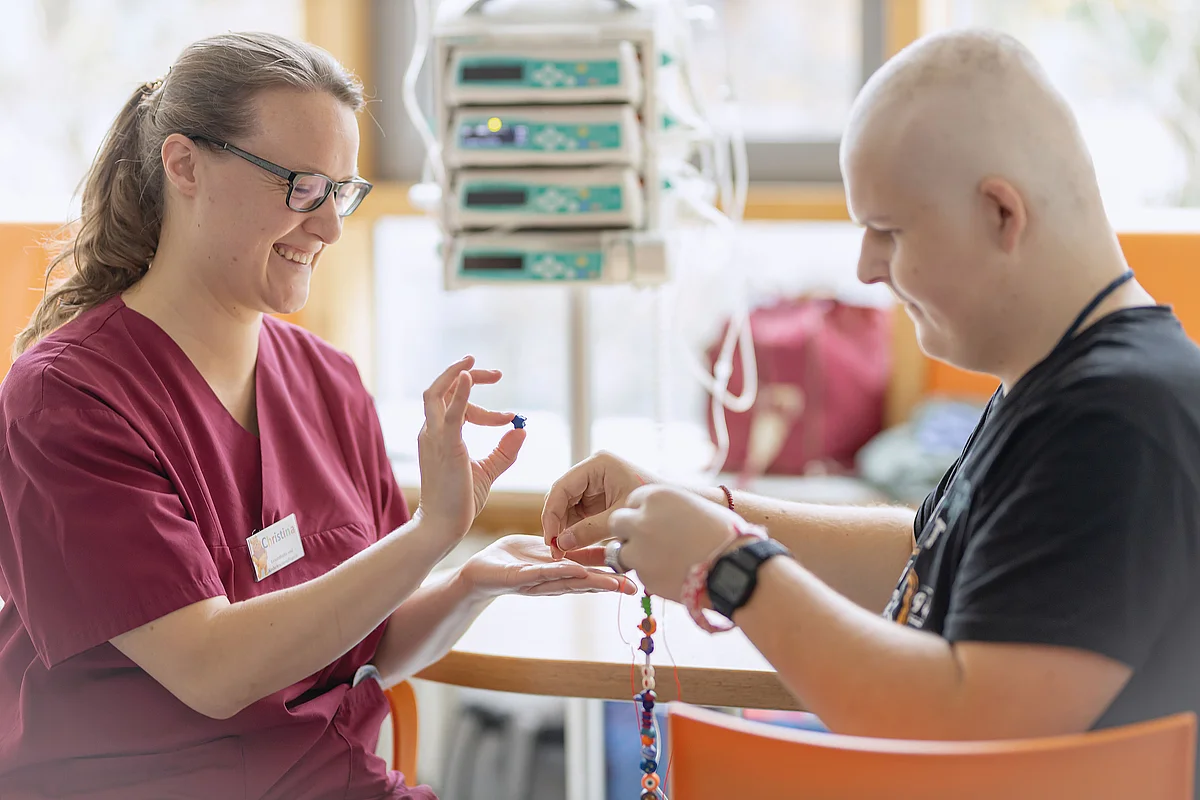
The “Mutperlen” (beads of courage) project was launched several years ago by the German Children's Cancer Foundation and is now used in many clinics as a supportive therapy for childhood cancer.
Teenagers and young adults have special needs
According to a definition by the WHO, there is a special group of AYA (adolescents and young adults) aged between 15 and 25. These patients are also treated at our centre – in some cases jointly and in collaboration with colleagues from internal oncology and all organ-specific oncology disciplines.
Even though cancer in young people aged 13 to 18 only accounts for around 15 to 20% of all cancers in children and adolescents, a cancer diagnosis and its treatment are a particular challenge for young people. At this age, when young people's worlds are wide open and they are beginning to leave their parents' homes, the disease creates new dependencies and completely disrupts their social lives with their friends.
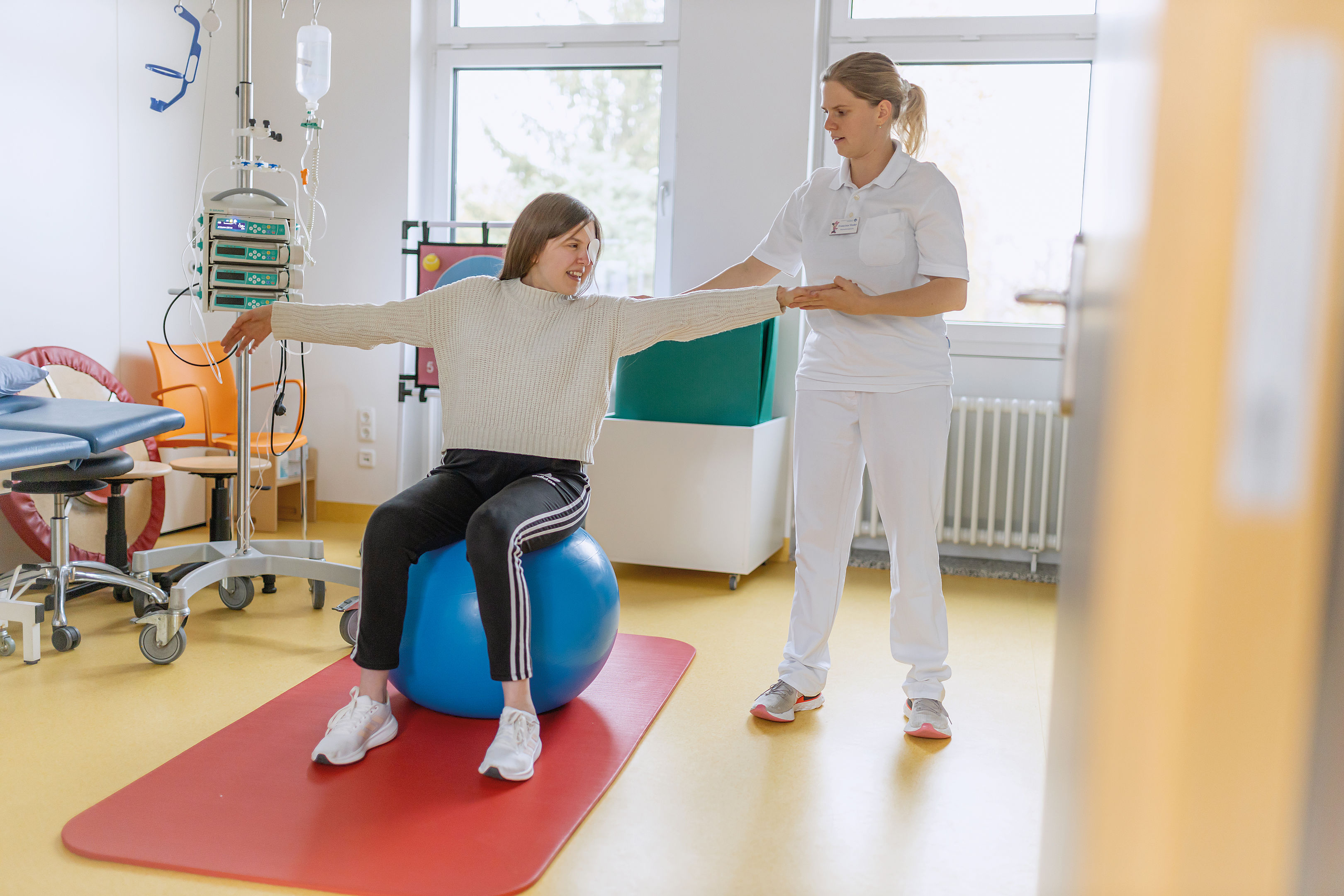
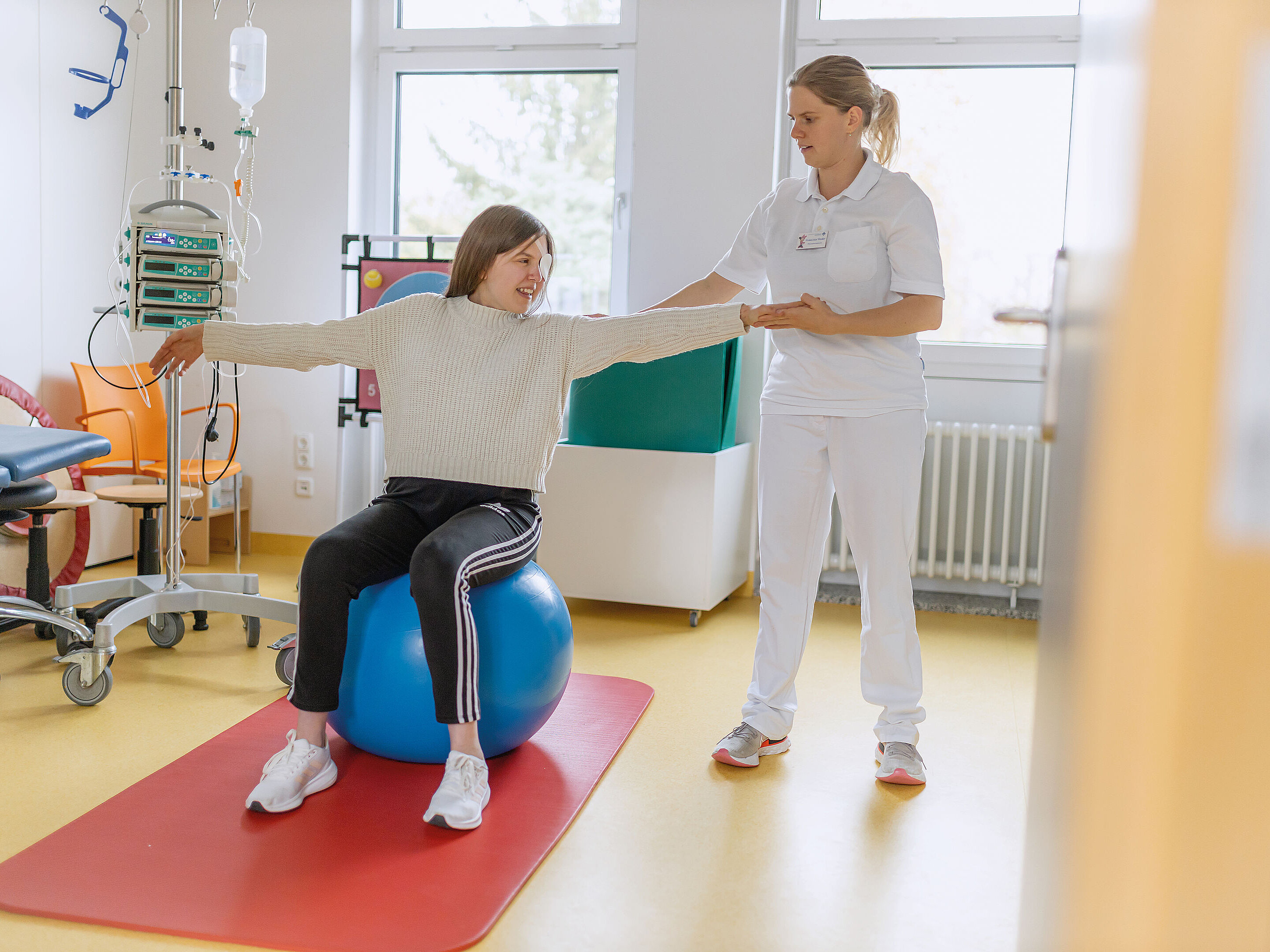
In addition to providing age-specific medical treatment for cancer, our multi-professional team supports young people in coping with their illness and therapy in the best possible way.
Our psychosocial team offers age-appropriate counselling and advice to patients, their siblings and friends. We also offer music, art and sports therapy specifically for this age group.
Young people of school age can receive lessons from teachers at the hospital school during their inpatient or day clinic stay. This is done in close coordination with their home school. On request, we can also organise home tuition from teachers at their home school.
In some cases, cancer treatment can lead to infertility and the inability to have children. In cooperation with the Clinic for Gynaecology and Obstetrics, the Clinic for Paediatric Surgery and the Augsburg Fertility Centre, specialists are available to provide procedures that enable young patients to conceive or have children of their own even after such therapy.
For male adolescents, the fertility clinic offers sperm storage in liquid nitrogen, where the germ cells can survive undamaged for many years. For girls, individual storage may be considered after surgical removal of parts of the ovaries by the Clinic for Gynaecology or Paediatric Surgery. We participate in the national fertility preservation project FertiProtect.