Specialties
The Swabian Children's Cancer Centre in Augsburg is one of the largest specialist centres for the treatment of children and adolescents with cancer and blood disorders in Bavaria. Approximately 50% of the 2,000 children and adolescents who are diagnosed with malignant diseases each year have leukaemia or lymphoma. Another 50% suffer from solid tumours.
Our Areas of Expertise
- Patients with leukaemia or lymphoma are comprehensively cared for at the Swabian Children’s Cancer Centre, from the first suspicion through diagnosis, the intensive therapy phase, and on to follow-up care.
- In addition to leukaemias and lymphomas, another key focus of the Swabian Children’s Cancer Centre is the care of children and adolescents with tumours of the central nervous system (brain tumours). This is done through close collaboration with neurosurgeons, neuroradiologists, paediatric radiologists, nuclear medicine specialists, radiation therapists, ENT specialists, and ophthalmologists. Thanks to our direct connection to Augsburg University Hospital, a maximum care hospital, the Swabian Children’s Cancer Centre has access to all the necessary diagnostic and therapeutic resources for this special group of patients.
- Alongside this largest group of patients with solid tumours, we also have extensive expertise in the treatment of embryonal tumours (e.g. neuroblastoma, nephroblastoma, and hepatoblastoma), as well as in the diagnosis and treatment of patients with bone tumours or soft tissue tumours.
Coordinated Collaboration
We treat more than 90% of all children and adolescents with cancer according to standardised treatment protocols and as part of clinical trials for therapy optimisation.
Surgery, radiotherapy, and chemotherapy are the three main pillars of cancer treatment. The central task of our team of doctors and nurses is the coordination of the entire process, from diagnosis using the latest radiological or nuclear medicine diagnostic techniques, to minimally invasive surgical procedures, and precise radiation therapy. As a team, we align the expertise and efforts of individual specialists in diagnostics, surgery, radiotherapy, and chemotherapy to ensure the best possible outcome. The unifying goal is a timely, yet as gentle as possible treatment, leading to the best possible treatment result.
The guiding principle for this approach is the therapy optimisation studies of the oncology professional societies (e.g., GPOH). Depending on the disease, age at diagnosis, and stage of spread, there are guidelines and recommendations for diagnostic and therapeutic procedures.
Our Swabian Children's Cancer Centre has extensive experience in conducting therapy optimisation studies for all stages of the disease and tumour stages. Additionally, we offer experimental treatments for patients with relapses or tumours that do not respond or respond inadequately to standard therapies.
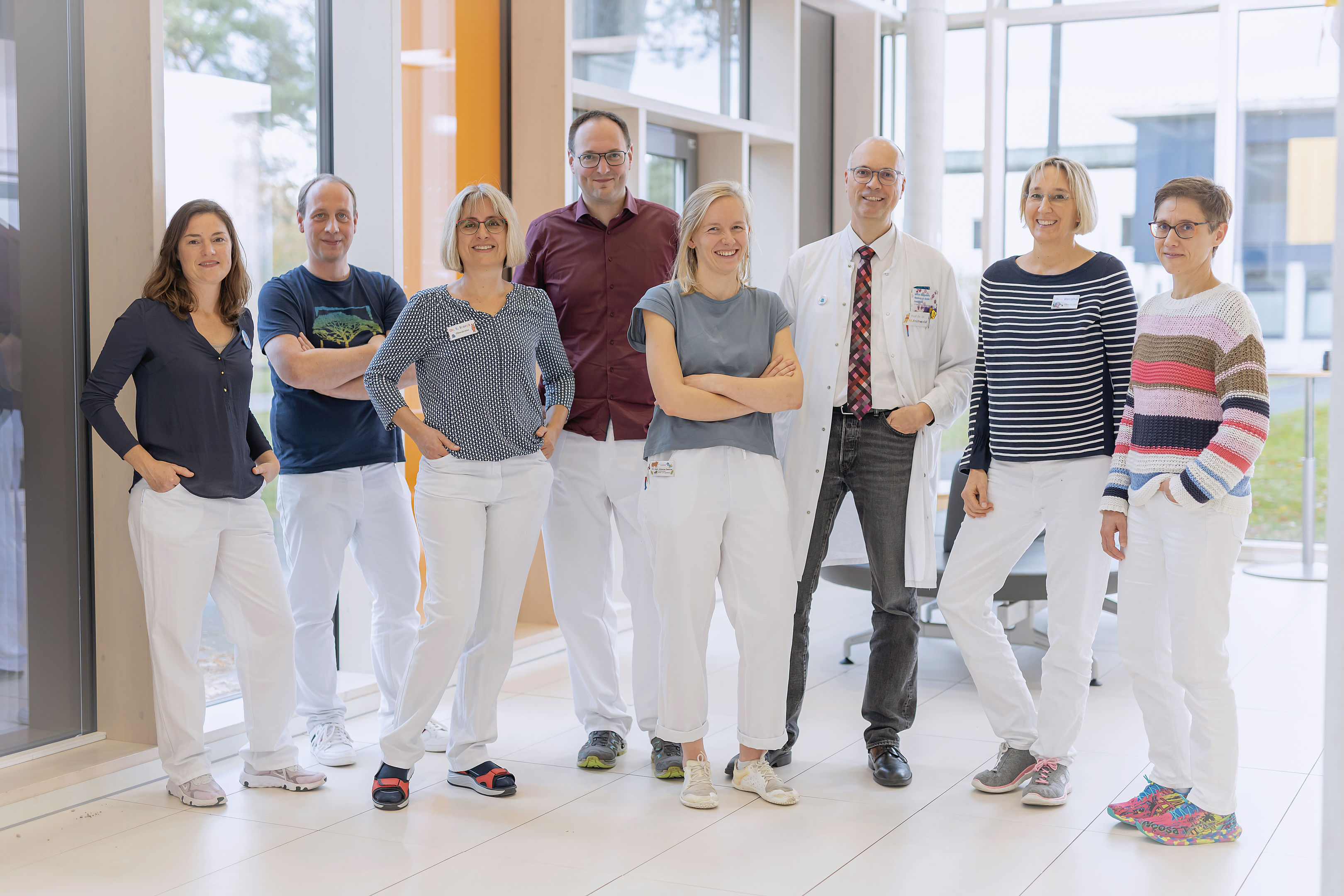
The team at the Swabian Children's Cancer Centre
Interdisciplinary collaboration
The Swabian Children's Cancer Centre is part of the Augsburg Children's Hospital and is directly linked to the Augsburg University Hospital. This means that all modern examination methods are available to our patients.
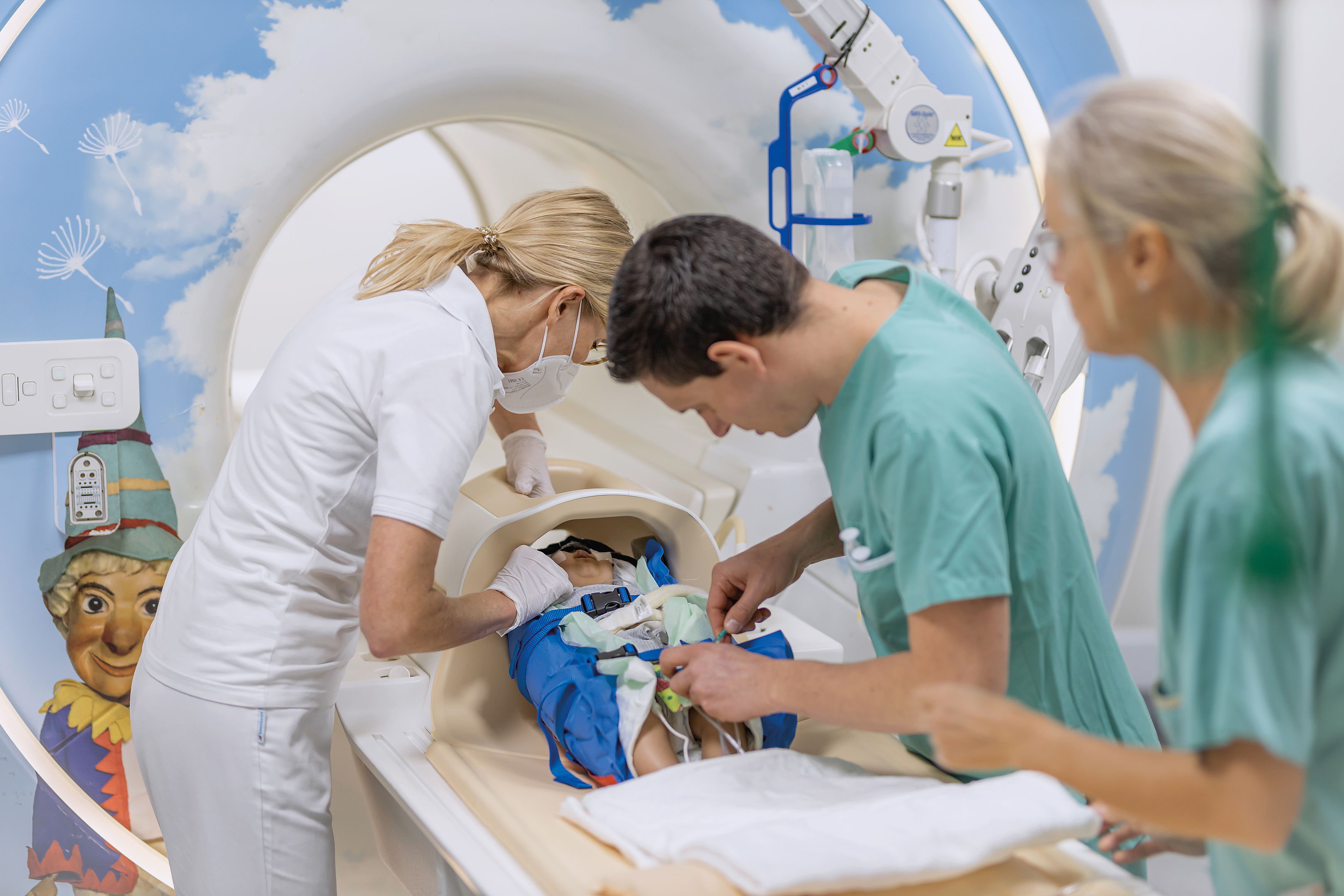
The Augsburg Children's Hospital has a special magnetic resonance imaging (MRI) scanner for children. Tumours in particular can be quickly diagnosed using this modern examination method and monitored throughout the course of treatment. In an emergency situation, an MRI scan can be performed within a short time, eliminating long waiting times.
In addition to several computerised tomography (CT) scanners in the nuclear medicine department of the University Hospital, there is also the option of scintigraphy or a CT-superimposed positron emission tomography scan. With this type of PET scan, a computerised tomography image is generated simultaneously with the positron image in a single device.
Our specialists can use these types of images to quickly draw conclusions about the size, location and type of tissue being examined.
The University Hospital Augsburg offers almost every medical examination method available, and if it appears useful for the respective therapy, it is also used for diagnostic purposes.